In Murrieta's Newest Neighborhoods, the House Might Legally Be a Condo
October 8, 2026
October 8, 2026
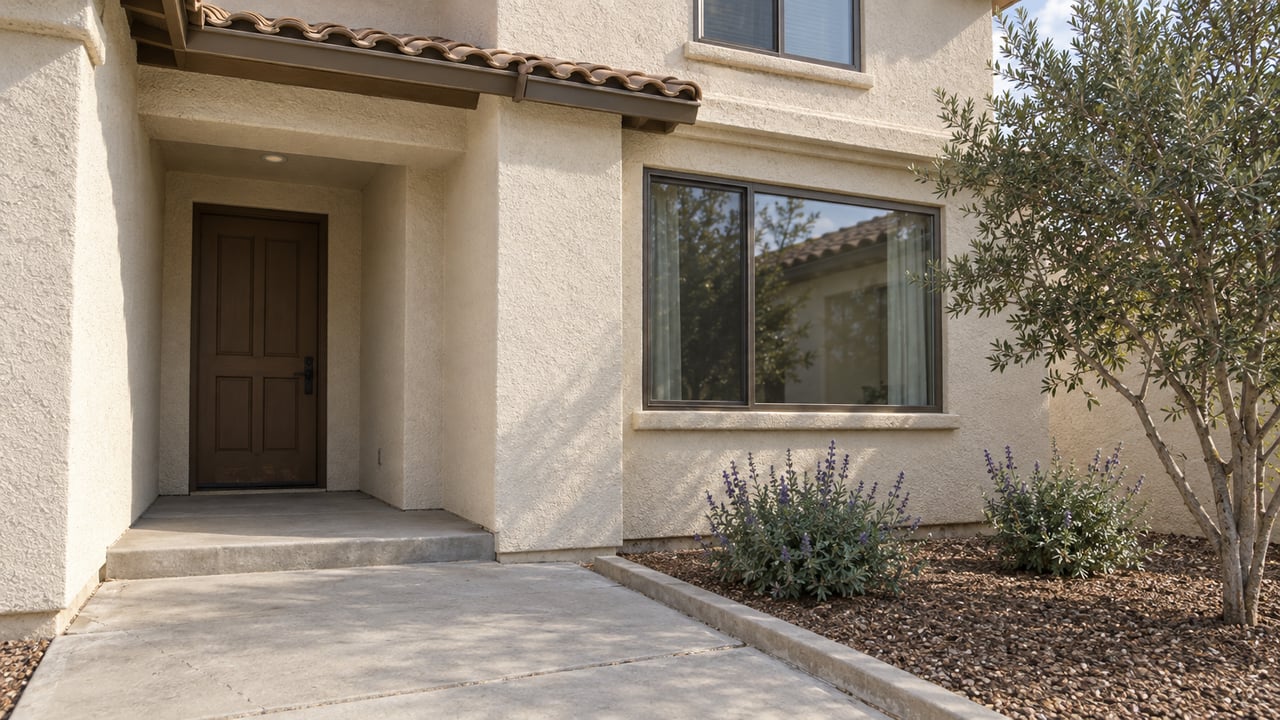
Century Communities' page for Gierson Ranch shows homes from 1,800 to 2,187 square feet near Historic Downtown Murrieta. They're arranged in motor courts, priced "from the high $600s," and each one has a bedroom on the main floor. Each floor plan card says "Single Family Home." The header for the whole community says "Condominiums."
Both labels are accurate. Under California Civil Code §4125, a home can have its own roof, its own walls, and a two-car garage and still be a condominium because the term describes how the property is legally owned, not what the building looks like. In Murrieta, that ownership structure is becoming the norm for new homes that look like houses. That changes what you should check on a new-construction purchase, and it makes the city's median price a weaker comparison than it seems.
On September 22, 2026, the City of Murrieta said it has exceeded its Regional Housing Needs Allocation and has "nearly 5,000 additional housing units permitted or pending approval." To a buyer, that sounds like more choice soon. The City's own project tracker, the Residential Activity List as of April 2026, shows what kind of choice.
The list puts single-family tracts in one section and condo and apartment projects in others. Here's how the units split across the stages the City tracks:
| Stage in the April 2026 list | Single-family section | Condo and apartment sections |
|---|---|---|
| Pending planning approval | 862 | 783 |
| Tentative map or units approved | 569 | 2,179 |
| Final map recorded | 87 | 332 |
| Under construction | 0 | 2,446 |
| Recently completed | 0 | 1,302 |
These are separate stages, so adding them up doesn't produce the City's "nearly 5,000." The pattern is still clear. Every unit the City lists as under construction falls in the condo and apartment sections. The big single-family projects are a long way off. Pulte's Murrieta Hills has a tentative map for 522 homes on a 970-acre site, and that map runs to 2032 under a development agreement. Vineyard Vista, Grenhill Investment Corp.'s 850-unit plan on 463 acres, was only submitted on April 7, 2026.
A lot of the multifamily total is apartments. That includes JPI's 851-unit Jefferson Murrieta Hot Springs project, which was grading as of April, and MBK Rental Living's 330-unit Vintage Farms on Clinton Keith Road. Some of it, though, is homes you'd call houses if you drove past them. The condo section lists Lennar's Willow Springs, formerly Adobe Springs, as 283 "detached condo units," completed in September 2025. Gierson Ranch sits in the multifamily section with 107 units, including 78 junior ADUs. In August 2026, the City's permit report showed Century Communities pulling permits for nine "Single Family New Tract Production" homes on Switchgrass Street on that same parcel.
So in the near term, much of Murrieta's new detached-style housing will arrive with condominium paperwork.
California Civil Code §4125 defines a condominium as a separate interest in a unit plus an undivided interest, shared with the other owners, in the rest of the property. The unit's boundaries are described on a recorded document, which can be a condominium plan, a final map, or a parcel map. Depending on how it was drawn, the unit can be the whole structure or include more property beyond it. Two detached condo communities in the same city can draw that line in very different places. The recorded document for your specific community is the only one that tells you where yours sits.
Areas outside the unit boundary can still belong to you in practice. A patio, porch, or similar feature can be "exclusive use common area" under §4145. That means it's assigned to one owner for their use, even though it isn't titled to that owner as part of the unit.
That boundary also decides who pays when something breaks. Unless the community's declaration says otherwise, Civil Code §4775 sets these defaults:
Every one of those defaults can be changed by the CC&Rs. This is where a detached condo differs from a single-family lot that happens to have an HOA. A regular lot can carry CC&Rs too, as the California Department of Real Estate points out. The real difference is the recorded ownership boundary and the shared property that comes with it. Whether an HOA exists doesn't settle the question.
A loan on a condominium usually includes a look at the whole project. For detached units, the major loan programs lighten that review without dropping it entirely.
Fannie Mae's waiver for detached condo units removes the lender's project-level review of critical repairs and special assessments. The unit still has to be safe, sound, and structurally secure, though. And if Fannie Mae's Condo Project Manager marks a project "Unavailable," loans there remain ineligible. The current version is in the Selling Guide published September 2, 2026.
Freddie Mac treats a qualifying detached condo unit as "Exempt From Review." Freddie Mac's general project rules still apply, including the requirements for project insurance and title insurance.
The usual FHA path is project approval. Federal rules also allow a Site Condominium route. HUD's main definition of a site condominium is a project made up entirely of detached single-family homes, with no shared garages or other attached buildings. Under 24 CFR 203.43b, a site condominium still has to meet specific conditions, and the unit owner is responsible for insurance and maintenance costs on the unit.
Before you write an offer, ask how your loan program classifies the project. A motor-court layout could raise questions about shared structures, so a site-condo classification shouldn't be assumed.
The California Department of Insurance says condo unit-owner insurance covers personal property, loss of use, liability, medical payments, and interior improvements the owner is responsible for maintaining. The association generally insures the structure and the common areas. On a detached condo, whether the association's master policy covers your exterior walls and roof determines which kind of policy you need. State Farm's guidance says that if the master policy covers the exterior, a condo policy fits. If it doesn't, you may need a homeowners policy.
California Civil Code §5300 requires associations to send owners an insurance summary with the annual budget report. That summary warns that the association's coverage may not include the owner's improvements or belongings, and that the owner may owe part or all of a deductible. Get a quote from your insurer after reading that summary and the CC&Rs, not before.
IE-RE's August 2026 city report puts Murrieta's median sale price at $669,950, up 4% from a year earlier. It also shows 251 active listings, 26 total days on market, and $310 per square foot. That figure is one number for the whole city. It doesn't separate detached homes from attached ones, and it doesn't separate condo ownership from fee-simple lots. Gierson Ranch's "high $600s" starting price is close to that median. On paper, it can look like a typical Murrieta house at a typical Murrieta price.
The comparison only holds once you add the condo factors. Those include HOA dues and reserves, which parts of the building the association insures and repairs, and how a future buyer's lender will review the project. A resale home on its own lot at the same price carries none of those questions, though it has costs of its own.
Gierson Ranch adds one more factor. Two of its three floor plans include a junior accessory dwelling unit, which Century describes as space for a parent, a young adult, or rental income. Here the builder includes the JADU. California's anti-restriction rule for HOAs, Civil Code §4751, is written for planned developments on lots zoned single-family. If you want an ADU or JADU in a condo community, read that community's CC&Rs for the rules. Don't assume the state statute covers you.
On a resale, Civil Code §4525 requires the seller to provide the governing documents, the latest annual-report documents, and a current statement of regular and special assessments, unpaid charges, and unresolved violations. The budget report includes a reserve summary and a summary of the funding plan. Members can request the full reserve plan, so the standard resale packet may not include the complete reserve study. Buying directly from the builder falls under a different law, Business and Professions Code §11018.6, which requires the developer to provide the CC&Rs, association articles and bylaws, and available financial information.
For a detached condo in Murrieta, collect these and review them in this order:
Getting the order right matters. The recorded map or plan defines what you own, the CC&Rs define what you maintain, and the insurance summary and your loan both depend on those two answers.
Questions like these get answered at the title and escrow stage, and Sabrina Maricic has worked in title, escrow, and mortgage herself in addition to representing buyers and sellers. If you're comparing a detached condo at Gierson Ranch or Willow Springs with a resale home on its own lot, Sabrina can go through the recorded plan, the CC&Rs, and the master policy with you before you write an offer. Let's Connect.
This article is general information, not legal, tax or financial advice. Consult a qualified professional about your situation.
Whether you are buying your first home or selling an investment, Sabrina brings clarity to the complex real estate process. She is known for her approachable nature and fierce commitment to getting the best results for her clients. Connect with her today for a seamless experience.